
World of Ghibli: Scenes from Eastern Japan
 Shinobu
One of the greatest appeals of Studio Ghibli films is their breathtakingly beautiful Japanese landscapes, which evoke a sense of nostalgia.
In this article, we introduce cities and natural sites in eastern Japan, organized by prefecture, that have been mentioned or discussed as sources of inspiration for many masterpieces such as “My Neighbor Totoro” and “Princess Mononoke.”
From the vast wetlands of Hokkaido to the traditional satoyama landscapes near Tokyo and even Ghibli Park in Aichi, eastern Japan is home to many must-visit “sacred sites” for Ghibli fans.
Why not visit places that feel as if they have stepped straight out of an animated world and experience the magical atmosphere of Ghibli films?
- Hokkaido and Tohoku Region
- Kanto and Koshinetsu Region
- Saitama Prefecture, Sayama Hills (“Totoro’s Forest”) / “My Neighbor Totoro”
- Tokyo, Seiseki-Sakuragaoka / “Whisper of the Heart”
- Kanagawa Prefecture, Yamashita Park and Harbor View Park / “From Up on Poppy Hill”
- Kanagawa, Yokohama Motomachi Shopping Street / “The Cat Returns”
- Nagano Prefecture, Kamikochi Imperial Hotel and Mampei Hotel / “The Wind Rises”
- Tokai Region
- Summary
1. Hokkaido and Tohoku Region
Hokkaido, Kushiro Wetlands / “When Marnie Was There”
- Overview: Set in the Muromachi period, the story follows Ashitaka, a young man from the Emishi village who is cursed by a demon god.
- He journeys west to lift the curse and encounters a world where forest gods and humans are in conflict, portraying the coexistence of nature and humanity.
- Highlight: The mystical forest known as the “Forest of the Deer God” is believed to be inspired in part by Shirakami-Sanchi, a mountainous region spanning Aomori and Akita Prefectures.
The Kushiro Wetlands are the largest wetlands in Japan, so vast that Tokyo’s 23 wards could fit inside them.
Visitors can enjoy canoeing down the river, viewing the wetlands from observation decks, or riding the sightseeing train “Kushiro Shitsugen Norokko Train.”
The mist-covered wilderness and tranquil water surfaces seen in the film can be experienced firsthand here, allowing visitors to feel the quiet and fantastical atmosphere of the story.
You may also encounter wildlife such as wild birds and Ezo deer.
Kushiroshitsugen National Park Website
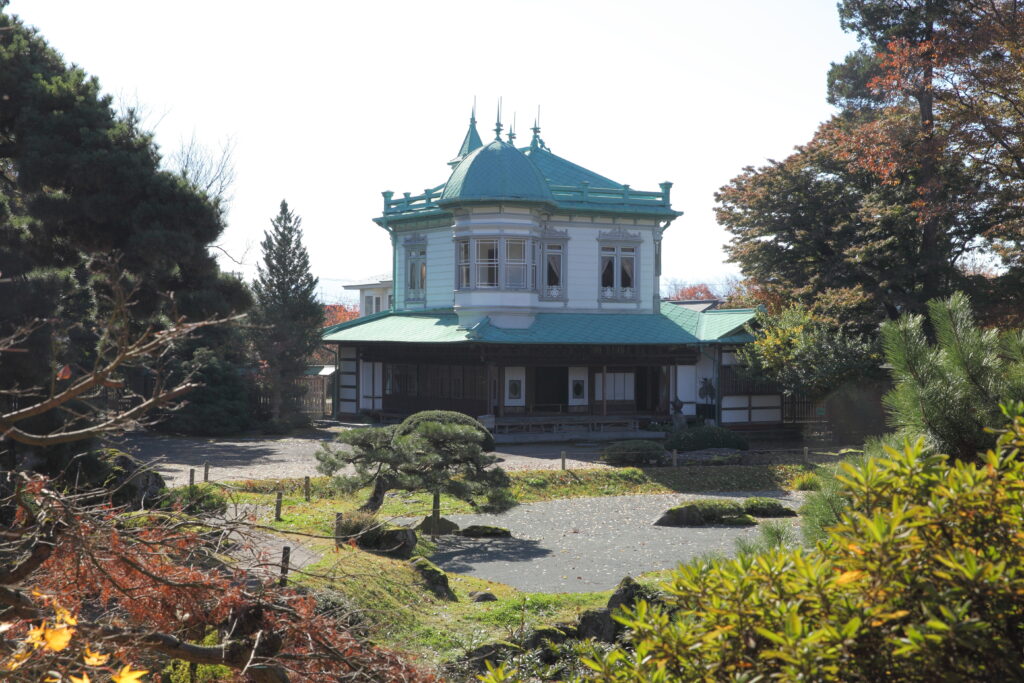
Aomori Prefecture, Seibi-en Garden / “The Secret World of Arrietty”
- Overview: A story about a family of tiny people, only 10 centimeters tall, who live beneath the floorboards and “borrow” items from humans. It depicts the friendship between Arrietty, a tiny girl, and Sho, a human boy who comes to stay at the house for medical treatment.
- Highlight: The large mansion where Arrietty and her family live is said to be modeled in part on Seibikan, a building in Seibi-en Garden in Hirakawa City, Aomori.
Seibi-en is one of the three great Meiji-era gardens of Japan.
Seibikan, built for viewing the garden, is a unique structure that combines Japanese and Western styles, with a traditional Japanese first floor and a Western-style second floor.
Its mysterious atmosphere strongly evokes the image of a grand, secretive mansion like the one in Arrietty’s world.
The garden’s stone bridges, pond, and the Seibikan building create a beautiful scene reminiscent of the film’s perspective and sense of scale.
Seibien Official Website
Aomori Prefecture, Shirakami-Sanchi / “Princess Mononoke”
- Overview: Set in the Muromachi period, the story follows Ashitaka, a young man from the Emishi village who is cursed by a demon god. He journeys west to lift the curse and encounters a world where forest gods and humans are in conflict, portraying the coexistence of nature and humanity.
- Highlight: The mystical forest known as the “Forest of the Deer God” is believed to be inspired in part by Shirakami-Sanchi, a mountainous region spanning Aomori and Akita Prefectures.
Shirakami-Sanchi is a precious natural heritage site containing one of the world’s largest virgin beech forests and was registered as a UNESCO World Natural Heritage site in 1993.
Its pristine, mysterious forest closely resembles the sacred woodland depicted in “Princess Mononoke.”
Deep within the forest, visitors can experience a silence and untouched power of nature that makes it seem as if the tree spirits (kodama) from the film might appear at any moment.
Shirakami Sanchi Official Website
Yamagata Prefecture, Zao Mountain Range / “Only Yesterday”
- Overview: Taeko, a 27-year-old single woman working in Tokyo, travels to the countryside of Yamagata during her summer vacation to help harvest safflower. While working on the farm, she reflects on her life in the city and memories of her fifth-grade years.
- Highlight: The rural village Taeko visits is modeled after the Takase area of Yamagata City. During her journey, she and her friend Toshio also visit the Zao Mountain Range, which spans Yamagata and Miyagi Prefectures.
Zao features the beautiful crater lake Okama, which appears in the story.
Its emerald-green waters and the majestic mountain scenery form the backdrop to Taeko’s personal journey of self-reflection away from the bustle of the city.
By exploring Zao and searching for landscapes seen in the film, such as riding the lift to the observation point, visitors can share in Taeko’s emotions and experience a sense of nostalgia.
Zao Mountain Range Official Website
2. Kanto and Koshinetsu Region
Saitama Prefecture, Sayama Parks (“Totoro’s Forest”) / “My Neighbor Totoro”
- Overview: Set in the 1950s, the story follows sisters Satsuki and Mei, who move to an old house while their mother recuperates from illness. They encounter the forest spirit Totoro and experience magical events.
- Highlight: One model for the rich satoyama landscape where the sisters live is the Sayama Hills, spanning Tokyo and Saitama. This area preserves the traditional rural scenery of Musashino and is a rare green oasis in the Tokyo metropolitan region.
Protected through citizen-led conservation efforts, these forests are called “Totoro’s Forest” and are spread across more than 60 locations.
Visitors can find large trees that seem like Totoro’s home and paths reminiscent of scenes from the film.
Sayama Parks Official Website

Tokyo, Seiseki-Sakuragaoka / “Whisper of the Heart”
- Overview: A coming-of-age story about Shizuku Tsukishima, a book-loving middle school girl who meets Seiji Amasawa, a boy whose name she often sees on library cards, and grows while pursuing her dreams.
- Highlight: The town where Shizuku lives is modeled on the Seiseki-Sakuragaoka area in Tama City, Tokyo. The hilly streets of the Tama Hills and the scenery around the station closely resemble those depicted in the film.
From the area that inspired the antique shop “Chikyu-ya,” located at the top of the slope Shizuku cycles up, visitors can enjoy a panoramic view of the city similar to the film.
The station’s train arrival melody being the film’s theme song “Country Road” is another special experience.
Kanagawa Prefecture, Yamashita Park and Harbor View Park / “From Up on Poppy Hill”
- Overview: 1Set in Yokohama in 1963, the story follows high school student Umi Matsuzaki, who lives in a Western-style house overlooking the harbor, and Shun Kazama from the school newspaper club, portraying student life and a gentle romance.
- Highlight: The film is set in the historic port city of Yokohama. The scenery around Harbor View Park is believed to have inspired views from locations such as the model for Umi’s residence and the school with its old cultural club building.
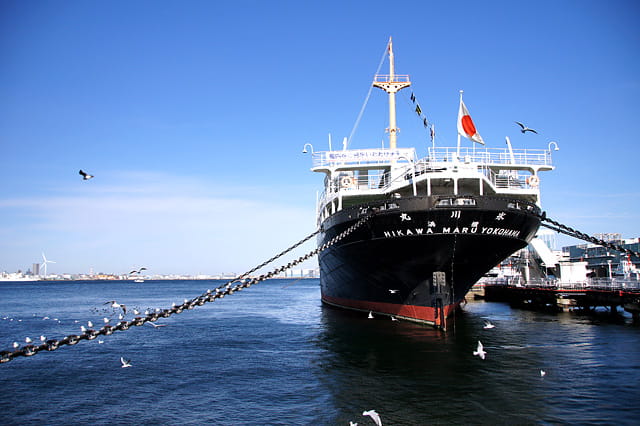
Yamashita Park and the moored luxury liner Hikawa Maru also appear in the nostalgic port scenery depicted in the film.
Walking along the stone-paved streets and gazing at the harbor allows visitors to fully experience the film’s refreshing yet bittersweet atmosphere.
Yamashita Park Official Website
Kanagawa, Yokohama Motomachi Shopping Street / “The Cat Returns”
- Overview: A fantasy story in which an ordinary high school girl named Haru saves a cat from being hit by a car and is drawn into the Cat Kingdom as a form of “repayment,” seeking help from Baron, a gentleman cat, and Muta.
- Highlight: The area around Yokohama’s Motomachi Shopping Street is said to have inspired the place where Haru meets Muta and is led toward the Cat Kingdom.
The Western-style, sophisticated streets and intersections resemble the gateway to another world seen in the film.
Fans may even spot objects resembling the white round table and chairs where Haru met Muta.
Visiting this location heightens the sense that a mysterious world of cats might exist just beyond everyday life.
Yokohama Motomachi Shopping Street Official Website
Nagano Prefecture, Kamikochi Imperial Hotel and Mampei Hotel / “The Wind Rises”
- Overview: Based on the life of Jiro Horikoshi, designer of the Zero fighter plane, the film portrays a young man’s dream of flight and his fleeting love with Naoko, a girl suffering from tuberculosis.
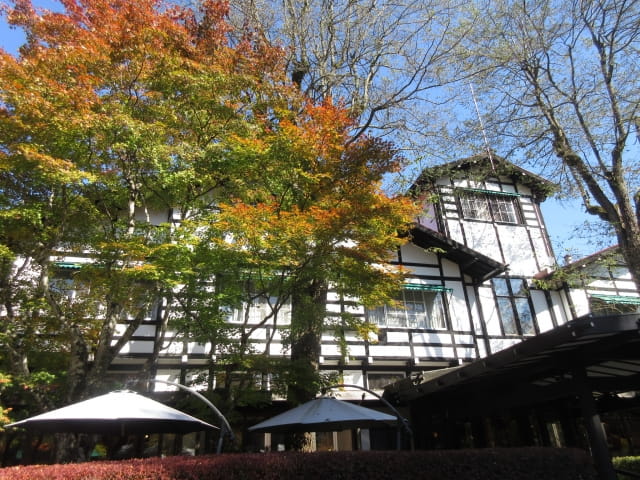
- Highlight: The atmosphere of the sanatorium where Naoko stays and the mountain resort hotel in the film is said to be inspired by places such as the Kamikochi Imperial Hotel in the scenic mountain area of Kamikochi and the Mampei Hotel in Karuizawa.
The Kamikochi Imperial Hotel, known for its red triangular roof, blends harmoniously with the surrounding grand nature.
The Mampei Hotel features a European-style exterior and a classic interior combining Japanese and Western elements, including glass sliding doors and Karuizawa wood carvings.
The quiet and refined atmosphere of the hotels in the film closely resembles these locations.
The beautiful nature of Kamikochi is depicted as a place that comforts Naoko and allows her to spend precious time with Jiro.
Kamikochi Imperial Hotel Official Website
Mampei Hotel Official Website
3. Tokai Region
Aichi Prefecture, Nagakute City / Ghibli Park
- Overview:Although not based on a specific film setting, Ghibli Park is introduced here as a new destination where visitors can experience the world of Studio Ghibli.
- Highlight: Located within Expo 2005 Aichi Commemorative Park (Moricoro Park) in Nagakute City, Aichi, Ghibli Park has been gradually opening since 2022.
Built under the concept of “creating in harmony with the forest,” the park uses the natural environment to express the world of Ghibli as a whole.
The park features “Ghibli’s Grand Warehouse,” “Hill of Youth,” “Dondoko Forest” (home to Satsuki and Mei’s house from “My Neighbor Totoro”), “Mononoke Village,” and “Valley of Witches,” where visitors can enjoy the spirit of the films through all five senses.
It offers a unique experience that combines the immersive feeling of stepping into a movie with the beauty of nature.
Ghibli Park Official Website
4. Summary
The Japanese landscapes depicted in Ghibli films are not only beautiful but also evoke something deeply meaningful in people’s hearts.
Traveling through eastern Japan is not simply about retracing scenes from movies, but also about discovering the culture and natural beauty that form the foundation of these works.
The locations introduced here are only a small selection.
What are we?
We run Ninja Experience Cafe in Tokyo, Kyoto and Osaka, Japan.
Here you can immerse yourself in Japanese culture through experiencing ninja training.
Both adults and children are welcome to try their hand at defeating the ninja master inside the cafe.
The cafe is an indoor interactive zone, so it can be enjoyed even on rainy days.
If you are thinking "I want to be a real ninja too!” or interested in becoming a real ninja, please visit us.
Reservations can be made here.
Unauthorized copying and replication of the contents of this site, text and images are strictly prohibited.