Guide to Navigating Tokyo Metro: Essential Subway Tips in Japan
 Shinobu
During your first trip to Tokyo, have you ever looked at the enormous stations filled with multilingual signs and complicated-looking railway maps and thought, “The subway seems too difficult…”?
In reality, Tokyo Metro and Toei Subway provide many systems designed to help travellers move around smoothly without getting lost, including colour-coded maps, station numbering systems, tourist passes, and convenient smartphone apps.
In this guide, we will explain the “complete strategy for mastering the Tokyo Metro” in simple steps so that even foreign travellers unfamiliar with Japanese railways can confidently ride trains from tomorrow onward.
- Introduction: Why Does the Tokyo Metro Look Like a “Maze”?
- Understanding the Overall Structure of Tokyo’s Subway System
- Using Route Maps, Station Numbering, and Colours to Your Advantage
- Which Ticket or Pass Should You Choose? Paper Tickets and Unlimited Passes
- Making the Most of IC Cards (Suica and PASMO)
- Smartphone Apps and Online Tools for “Zero Getting Lost”
- Practical Guide: Moving Through Stations and Transfer Tips
- Rush Hours, Safety, and Etiquette: Helpful Things to Know
- Common Mistakes and How to Avoid Them
- Summary
1. Introduction: Why Does the Tokyo Metro Look Like a “Maze”?
Tokyo is one of the world’s largest railway cities, with more than 280 subway stations spread across the city.
For first-time visitors, it can truly feel like a maze.
However, thanks to colour-coded train lines, station numbering systems, English-language guidance, detailed route maps, and smartphone apps, the subway becomes an extremely efficient and surprisingly easy way to travel once you understand the basic rules.
In this guide, we will organise practical information such as “Which ticket should I buy?”, “Which apps should I use?”, and “Where do travellers usually get lost?” to help you confidently navigate Tokyo Metro.
2. Understanding the Overall Structure of Tokyo’s Subway System
Understanding the Difference Between Tokyo Metro and Toei Subway
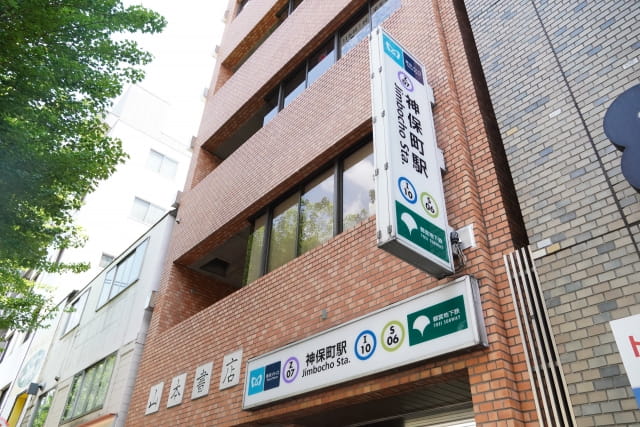
Tokyo’s “subway system” is actually operated by two different companies.
- Tokyo Metro
- Number of lines: 9
- Number of stations: Around 180 stations across approximately 195 km
- Covers major shopping districts, sightseeing areas, and central Tokyo
- Toei Subway
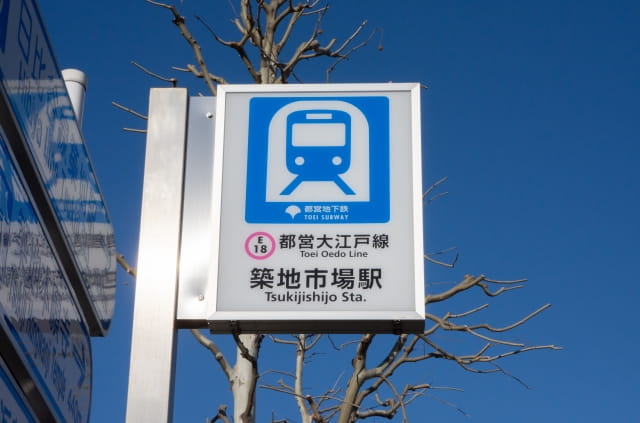
- Number of lines: 4 (Asakusa Line, Mita Line, Shinjuku Line, and Oedo Line)
- The Oedo Line forms a loop around central Tokyo, while the Asakusa Line directly connects with private railways heading towards Narita and Haneda Airports
Because these are separate companies with separate fare systems, travellers using paper tickets often become confused when transferring between Tokyo Metro and Toei Subway, as separate tickets may be required.
Combining Subways, JR Lines, and Private Railways
Tokyo’s transport system also includes JR lines such as the Yamanote Line, along with many private railway companies such as Tokyu, Odakyu, Keio, and Tobu.
Many lines operate through services, meaning trains continue directly onto other railway networks.
For example, the Tokyo Metro Chiyoda Line connects directly with the Odakyu Line and JR Joban Line, while the Hanzomon Line connects with the Den-en-toshi Line. It is not unusual to think you are still riding the subway only to realise you have entered a suburban private railway area.
For sightseeing purposes, it helps to think of the system broadly as follows:
• Subway lines for central Tokyo
• JR Yamanote Line for travelling around the city loop
• Private railways for suburban sightseeing destinations
3. Using Route Maps, Station Numbering, and Colours to Your Advantage
How to Read the Colourful Route Maps
Tokyo Metro and Toei Subway provide official colour-coded route maps.
Free paper versions are available at stations, and PDF versions can also be downloaded online.
Toei Subway English Map
Tokyo Metro English Map
At first glance, the maps may seem overwhelming because of the large number of lines.
However, if you focus only on the lines you plan to use and memorise only major transfer stations, the maps quickly become much easier to understand.
Understanding the Station Numbering System
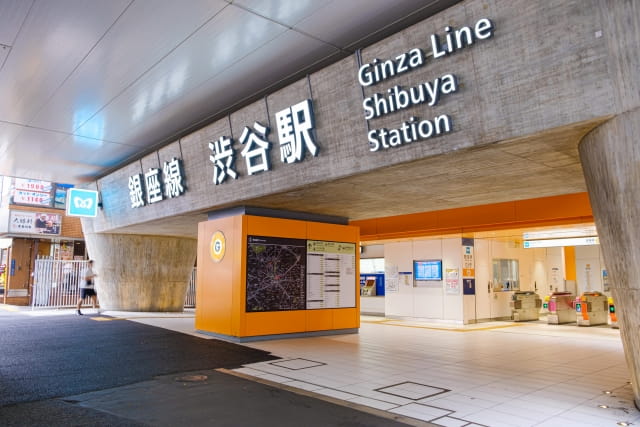
Each Tokyo Metro line is assigned a letter and a colour.
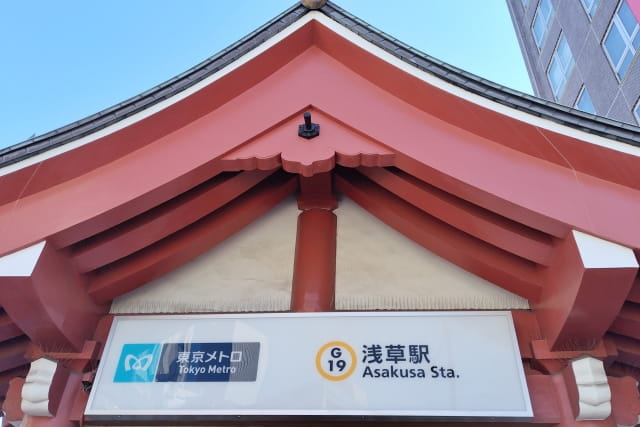
For example, G represents the Ginza Line and M represents the Marunouchi Line.
Stations are labelled using a combination of the line letter and a number.
For example, “G09” means the ninth station on the Ginza Line.
These codes appear on station signs and train monitors, allowing travellers to follow destinations even if they cannot read Japanese characters.
Because maps are designed using colours, letters, and numbers, travelling from Shibuya (G01) to Asakusa (G19) simply means following the orange Ginza Line in the direction where the numbers increase.
4. Which Ticket or Pass Should You Choose? Paper Tickets and Unlimited Passes
Standard Fares and One-Way Tickets
Fares on Tokyo Metro and Toei Subway are generally based on travel distance.
Tokyo Metro fares usually range from around 180 to 330 yen, while Toei Subway fares range from around 180 to 430 yen.
When using both companies, the fares are added together.
At station ticket machines, travellers can either search for their destination station or select the required fare amount to purchase one-way paper tickets.
However, if you plan to ride multiple times during sightseeing, IC cards or unlimited passes are usually more convenient.
Tokyo Metro 24-Hour Ticket and One-Day Passes
The “Tokyo Metro 24-hour Ticket” allows unlimited rides on all Tokyo Metro lines for 24 hours from the moment of purchase.
Prices:
• Adults: 700 yen
• Children: 350 yen
If you ride the subway four or more times in a single day, especially on short-distance routes, this pass often becomes cheaper than paying regular fares individually.
Tokyo Metro 1 Day Ticket Official Website
There is also a “One-Day Ticket for Toei Subway and Tokyo Metro”, which allows unlimited rides on both systems.
Prices:
• Adults: 900 yen
• Children: 450 yen
This pass is especially convenient for travellers visiting many areas in one day, such as Tokyo Skytree via the Oedo Line, airport connections via the Asakusa Line, and central sightseeing using Metro lines.
Toei Subway and Tokyo Metro One Day Ticket Official Website
Tokyo Subway Ticket (24/48/72-Hour Passes)
For foreign visitors, the “Tokyo Subway Ticket” offers unlimited rides on both Tokyo Metro and Toei Subway for fixed periods.
Prices:
• 24-hour ticket: Adults 800 yen / Children 400 yen
• 48-hour ticket: Adults 1,200 yen / Children 600 yen
• 72-hour ticket: Adults 1,500 yen / Children 750 yen
Travellers must show proof that they are foreign tourists, such as a passport.
For sightseeing trips lasting several days, especially two or three days, the 48-hour and 72-hour passes are highly cost-effective and time-saving.
5. Making the Most of IC Cards (Suica and PASMO)
What Are Suica and PASMO?
Suica and PASMO are rechargeable IC transport cards that work on Tokyo Metro, Toei Subway, JR lines, most private railways, and buses.
There is almost no functional difference between them.
The main differences are simply the issuing company and the design.
Travellers can purchase them at ticket machines or counters by paying an amount that includes a 500 yen deposit.
Cards can then be recharged at ticket machines or fare adjustment machines inside stations.
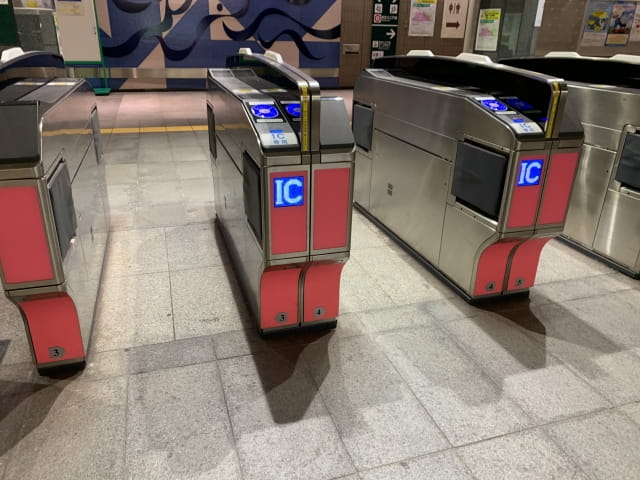
By simply touching the card against the ticket gate reader, travellers can enter and exit stations without needing to calculate fares or buy tickets each time.
Using Mobile Versions
On iPhone and Android devices, travellers can also use Mobile Suica or Mobile PASMO apps.
By holding a smartphone over the ticket gate, users can pass through without carrying a physical card.
Funds can be added through the apps or through Apple Pay and Google Pay, making them convenient for travellers who prefer cashless payments.
Other Ways to Use IC Cards Beyond the Subway
Suica and PASMO can also be used at vending machines, convenience stores, lockers, cafes, and many small shops.
For travellers frequently buying drinks or snacks, these cards can function almost like a small travel wallet.
6. Smartphone Apps and Online Tools for “Zero Getting Lost”
Official Apps and Route Search Tools
Route search apps are extremely useful while travelling in Tokyo.
- NAVITIME Japan Travel
A travel app that suggests routes using trains, walking, buses, and sightseeing information together.
Offline Route Maps
Saving PDF route maps on your smartphone or carrying paper maps from stations is very helpful when internet connections become unstable underground.
Keeping at least a basic map nearby provides peace of mind while travelling.
7. Practical Guide: Moving Through Stations and Transfer Tips
Things to Check Before Entering the Station
Large stations such as Shinjuku, Shibuya, and Tokyo Station have many different entrances.
Checking entrance numbers and nearby ticket gates beforehand using maps or apps can significantly reduce walking distances inside stations.
Basic Actions from Ticket Gates to Platforms and Trains
For paper tickets, insert the ticket into the yellow slot at the gate and remember to collect it afterward.
For IC cards or mobile versions, simply touch the blue reader area.
On platforms, passengers line up according to floor markings and wait for passengers to exit before boarding.
Inside trains, Japanese etiquette includes avoiding phone calls, keeping noise low, and paying special attention near priority seating areas.
How to Read Signs Without Getting Lost During Transfers
Inside stations, overhead signs display directions using line colours, letters, numbers, and arrows.
For example, signs may read “H Hibiya Line →”.
If you remember the colours and line letters, simply following the signs will naturally lead you to the correct platform.
At large stations, transfers may require 5 to 10 minutes of walking, so it is important to allow extra time.
8. Rush Hours, Safety, and Etiquette: Helpful Things to Know
Rush Hour Times and How to Avoid Them
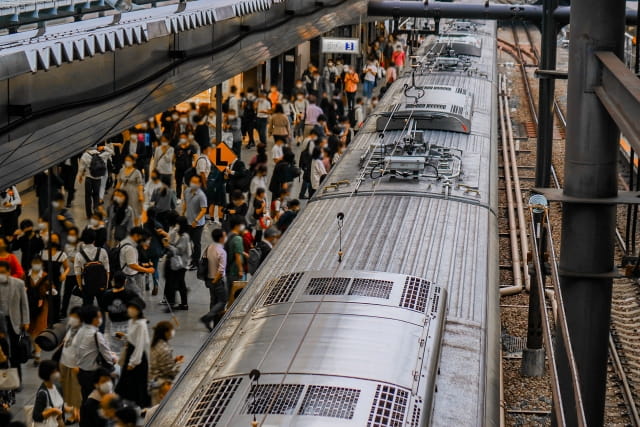
Tokyo’s subway system becomes especially crowded on weekdays from around 7:30 to 9:30 in the morning and from 17:30 to 19:30 in the evening.
During peak commuting times, station staff may even push passengers into crowded trains.
Travelling with large suitcases during rush hour can be extremely difficult.
For sightseeing, comfort improves greatly by travelling after 10:00 or very early in the morning between 5:00 and 7:00.
Safety and Trouble Prevention
Tokyo Metro is one of the safest public transport systems in the world, but crowded places still carry some risk of pickpocketing.
Keeping valuables in front of you and carrying backpacks on your chest are simple but effective precautions.
If you become lost or experience trouble, station information counters and staffed ticket gates are available for assistance.
Major stations often provide English support.
9. Common Mistakes and How to Avoid Them
- Mistake 1: Forgetting about the difference between companies and becoming unable to exit through another company’s ticket gate
- Solution: Pay attention to Metro and Toei logos, or use IC cards for simplicity
- Mistake 2: Spending too much time transferring and arriving late
- Solution: Allow around 10 minutes for transfers at large stations
- Mistake 3: Missing the last train
- Solution: Most lines stop operating around midnight, so start returning to your hotel before 23:00
- Mistake 4: Becoming exhausted by crowds and losing enthusiasm for sightseeing
- Solution: Avoid rush hour and flexibly switch to walking or taxis for short distances
10. Summary
Tokyo’s subway network may seem complicated at first, but by combining colour-coded maps, station numbering systems, IC cards, tourist passes, and smartphone apps, it becomes a powerful and reliable transport system that greatly expands your sightseeing possibilities.
The first step towards stress-free travel is obtaining an IC card or subway pass, checking routes with apps, and avoiding rush hours whenever possible.
After using the subway several times, you will quickly become familiar with following stations through “colour + letter + number”.
Once you master the Tokyo Metro, travelling between Tokyo’s major sightseeing destinations becomes dramatically easier, and even the act of transportation itself becomes part of the enjoyment of your journey.
What are we?
We run Ninja Experience Cafe in Tokyo, Kyoto and Osaka, Japan.
Here you can immerse yourself in Japanese culture through experiencing ninja training.
Both adults and children are welcome to try their hand at defeating the ninja master inside the cafe.
The cafe is an indoor interactive zone, so it can be enjoyed even on rainy days.
If you are thinking "I want to be a real ninja too!” or interested in becoming a real ninja, please visit us.
Reservations can be made here.
Unauthorized copying and replication of the contents of this site, text and images are strictly prohibited.