Japan’s 12 Castle Keeps Built Before the Edo Period
 Shinobu
Japan is home to many castles that continue to captivate visitors from around the world.
However, many of the castle keeps we see today were reconstructed in modern times after being lost to fires, wars, or the Meiji-era castle abolition policies.
Among them, only twelve original castle keeps built before the Edo period still survive in Japan today.
These are known as the “12 Original Castle Keeps”, precious cultural treasures that preserve authentic architecture from the age of the samurai.
Having survived for more than 400 years, they continue to convey the atmosphere and architectural techniques of feudal Japan.
In this article, we introduce the unique charm and history of these twelve authentic castles.
- Hirosaki Castle: Northern Japan’s Springtime Treasure
- Matsumoto Castle: National Treasure beneath the Northern Alps
- Inuyama Castle: Overlooking the Kiso River
- Hikone Castle: Beside Lake Biwa
- Maruoka Castle: A Legend of Mist
- Himeji Castle: The White Masterpiece Recognised by the World
- Bitchu Matsuyama Castle: Floating Above the Clouds
- Matsue Castle: Overlooking Lake Shinji
- Marugame Castle: Protected by Japan’s Tallest Stone Walls
- Kochi Castle: With Both its Keep and Palace Preserved
- Uwajima Castle: Overlooking the Uwa Sea
- Iyo Matsuyama Castle: Commanding Views Over the Seto Inland Sea
- Summary
1. Hirosaki Castle: Northern Japan’s Springtime Treasure
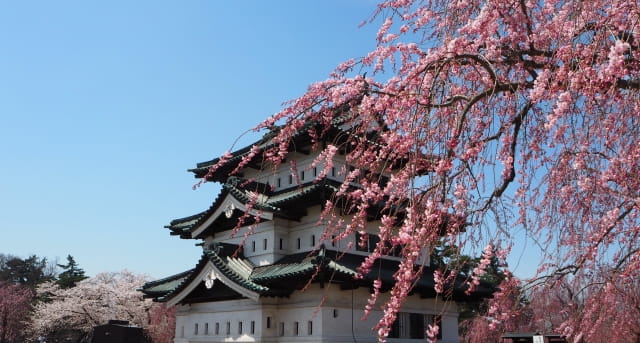
Hirosaki Castle is located in Hirosaki City, Aomori Prefecture.
It is the only surviving original castle keep in the Tohoku region.
Hirosaki Park, where the castle stands, is also famous as one of Japan’s greatest cherry blossom destinations.
Around 2,600 cherry trees bloom throughout the park every spring.
The original five-storey keep was destroyed by lightning in 1627.
The current three-storey keep was reconstructed in 1810 by remodelling a turret.
Although its decoration is modest, the structure features many practical defensive elements.
Large-scale stone wall restoration work is currently underway.
Hirosaki Castle Official Website
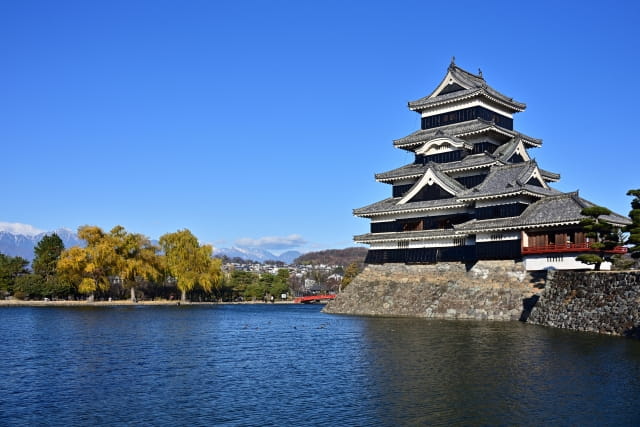
2. Matsumoto Castle: National Treasure beneath the Northern Alps
Matsumoto Castle in Nagano Prefecture is one of Japan’s five National Treasure castles.
Because of its black exterior walls, it is also known as “Crow Castle”.
Its greatest distinction is that it is the only surviving original flatland castle among the twelve original keeps.
Since it stands on open plains, three layers of moats were constructed for defence.
The keep, built during the late Sengoku period, has a highly practical military design.
Its walls contain numerous openings for firearms and arrows.
Another highlight is the Tsukimi Yagura, or Moon Viewing Turret, added during the peaceful Edo period.
Unlike the main keep, it was designed as an elegant space for appreciating the moon.
The contrast between the warlike black keep and the graceful moon-viewing turret defines the castle’s charm.
Its appearance against the backdrop of the Northern Alps is truly breathtaking.
Matsumoto Castle Official Website
3. Inuyama Castle: Overlooking the Kiso River
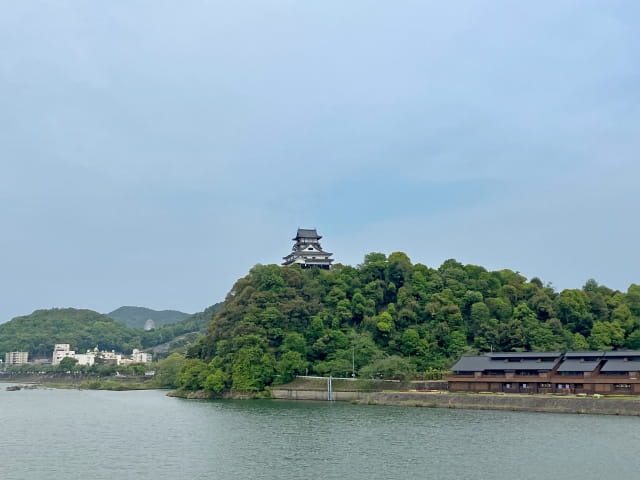
Inuyama Castle is located in Inuyama City, Aichi Prefecture.
Its keep is one of Japan’s five National Treasure castles and is believed by some to be the oldest surviving original keep.
It was reportedly built in 1537 by Oda Nobuyasu, the uncle of Oda Nobunaga.
Standing on a hill beside the Kiso River, the castle has a graceful appearance.
During the Edo period, it was governed by the Naruse family, retainers of the Owari Tokugawa clan.
Remarkably, the castle remained privately owned by the Naruse family until 2004.
It was the last privately owned castle in Japan.
Inside, visitors can experience steep staircases and low ceilings preserved from the original structure.
The top floor is surrounded by a balcony-like corridor called the mawari-en.
Visitors can step outside and enjoy spectacular panoramic views of the Kiso River, the Nobi Plain, and distant mountains.
Inuyama Castle Official Website
4. Hikone Castle: Beside Lake Biwa
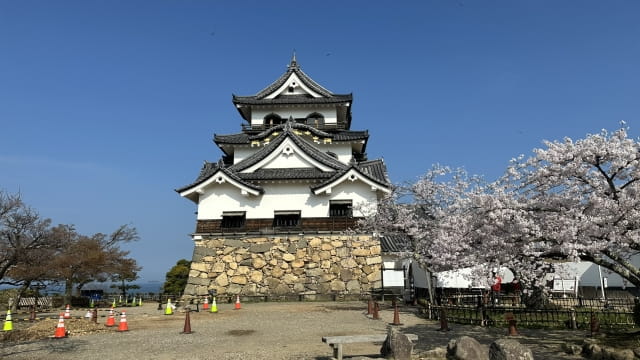
Hikone Castle stands near Lake Biwa in Hikone City, Shiga Prefecture.
It is counted among Japan’s five National Treasure castles alongside Himeji Castle.
The castle was built by the sons of Ii Naomasa, one of Tokugawa Ieyasu’s most trusted generals.
Although the keep is relatively small with three storeys, its design is highly sophisticated.
Its roofs feature a variety of decorative gables called hafu.
Depending on the viewing angle, the castle presents different expressions.
The combination of multiple architectural styles gives the castle an elegant appearance.
Hidden rooms also remain inside the keep.
The approach to the keep is another highlight.
The climbing stone walls built into the hillside are extremely rare in Japan.
The castle still preserves the dignity and political significance of the Tokugawa era.
Hikone Castle Official Website
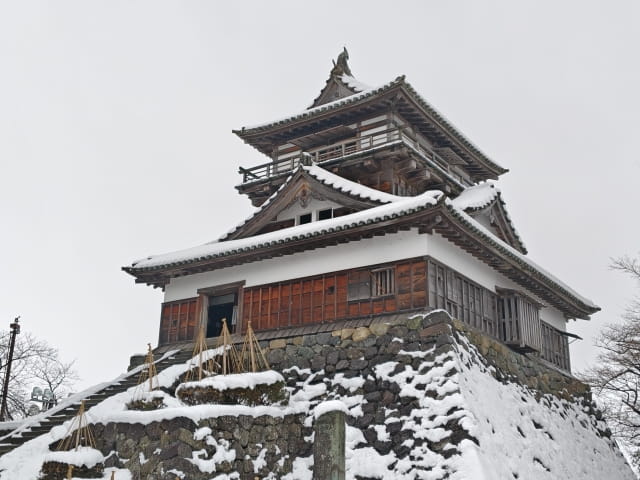
5. Maruoka Castle: A Legend of Mist
Maruoka Castle is located in Sakai City, Fukui Prefecture.
It is also known by the beautiful nickname “Kasumi Castle”, meaning “Mist Castle”.
According to legend, the castle became hidden in mist during battles to protect it from enemies.
It is often considered the oldest surviving original keep and has a rugged, traditional atmosphere.
The keep has two exterior storeys and three internal levels.
One unusual feature is its roof tiles.
Some of the tiles are made from local Fukui stone called shakudani-ishi.
These heavy stone tiles were designed to withstand the snowy climate of Hokuriku.
Their weight is said to be several times greater than ordinary roof tiles.
Inside, the castle still conveys the rough atmosphere of the Sengoku era.
The staircase leading from the second to the third floor is especially famous.
With an incline of around 65 degrees, it is considered one of the steepest castle staircases in Japan.
The castle collapsed during the 1948 Fukui earthquake but was restored using surviving original materials.
Its survival through such hardship adds to its unique appeal.
Maruoka Castle Official Website
6. Himeji Castle: The White Masterpiece Recognised by the World
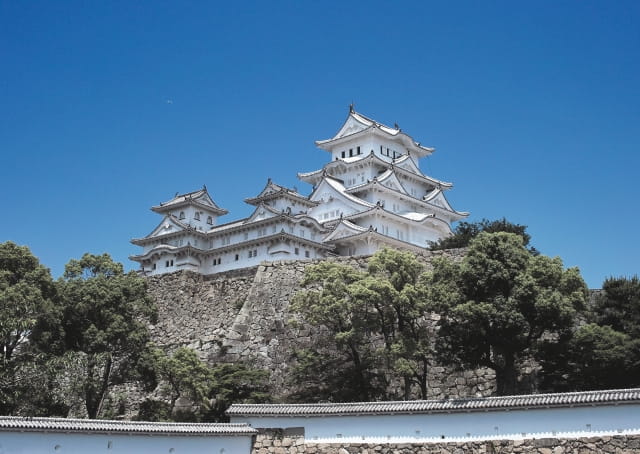
Himeji Castle in Hyogo Prefecture is one of Japan’s most famous castles.
In 1993, it became Japan’s first UNESCO World Heritage Site.
Its elegant white appearance has earned it the nickname “White Heron Castle”.
The current castle complex was completed in 1609 by Ikeda Terumasa.
The white plaster walls are not only beautiful but also highly fire-resistant and durable.
For over 400 years, Himeji Castle has miraculously escaped destruction by war and disaster.
It is often called “the castle that never fell nor burned”.
Its defensive systems are equally impressive.
The path to the keep twists like a maze.
Gates and countless defensive openings were designed to stop invaders.
Inside, the keep has six above-ground floors and one basement level.
It is regarded as the finest masterpiece of Japanese castle architecture and is an essential destination for history lovers.
Himeji Castle Official Website
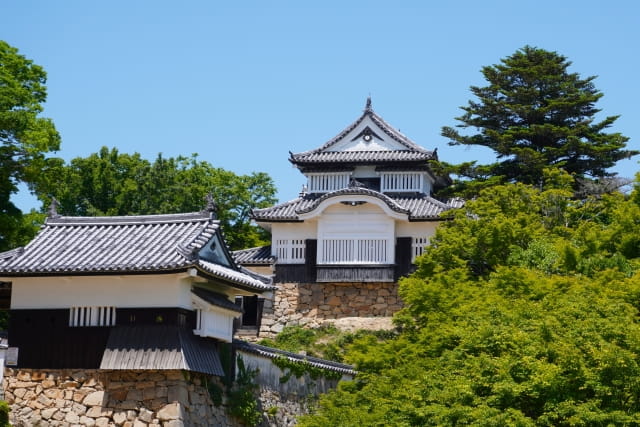
7. Bitchu Matsuyama Castle: Floating Above the Clouds
Bitchu Matsuyama Castle is located in Takahashi City, Okayama Prefecture.
Among the twelve original keeps, it is the only surviving mountain-top castle.
Built at an elevation of 430 metres atop Mount Gagyu, it is known as the highest surviving castle keep in Japan.
During autumn and winter mornings, thick fog sometimes fills the Takahashi Basin below.
The castle then appears to float above a sea of clouds, creating a mystical landscape.
For this reason, it is also called the “Castle in the Sky”.
The current keep was renovated in 1683 by Mizunoya Katsumune.
Although the keep itself is small with two storeys, its commanding mountain-top presence feels majestic.
Visitors can also observe natural stone walls integrated into the mountain terrain.
The castle beautifully combines nature with military architecture.
Bitchu Matsuyama Castle Official Website
8. Matsue Castle: Overlooking Lake Shinji
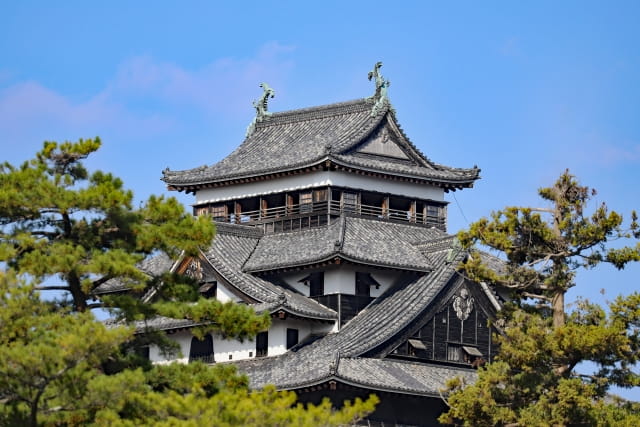
Matsue Castle stands in Matsue City, Shimane Prefecture.
In 2015, it became the fifth National Treasure among the twelve original keeps.
Located beside Lake Shinji, it is nicknamed “Plover Castle” because its roof resembles a bird spreading its wings.
The keep has five external storeys and six internal floors, making it the second largest after Himeji Castle.
Unlike Himeji’s white elegance, Matsue Castle features a heavy black exterior with a highly practical military design.
It was built by Horio Yoshiharu, a warlord active during the transition from the Sengoku to Edo periods.
Inside, the original pillars and beams remain exposed, creating an imposing atmosphere.
A large well for surviving sieges still exists in the basement.
The top floor is an open observation space called a borou.
Visitors can enjoy panoramic views over Matsue City and Lake Shinji.
Boat cruises around the moat are also popular and offer beautiful perspectives of the castle.
Matsue Castle Official Website
9. Marugame Castle: Protected by Japan’s Tallest Stone Walls
Marugame Castle is located in Marugame City, Kagawa Prefecture.
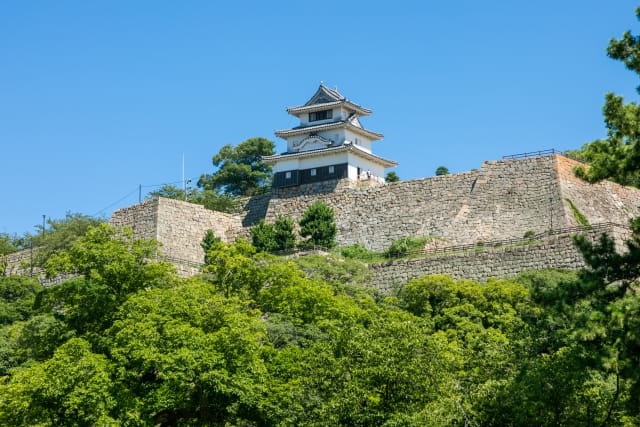
It is often described as a masterpiece of stone wall construction.
The keep itself is among the smallest of the twelve original keeps, with three storeys.
However, the enormous stone walls supporting it are truly spectacular.
The height from the inner moat to the keep reaches around 60 metres.
They are often referred to as the tallest stone walls in Japan.
The walls form elegant curves known as the “fan-shaped slope”.
This design prevented enemies from climbing the walls and demonstrated advanced engineering techniques.
The castle was developed during the early Edo period by the Ikoma and Yamazaki clans.
From the top, visitors can overlook Marugame City and the islands of the Seto Inland Sea.
The beauty and scale of the stone walls are just as impressive as the keep itself.
Marugame Castle Official Website
10. Kochi Castle: With Both its Keep and Palace Preserved
Kochi Castle stands in central Kochi City.
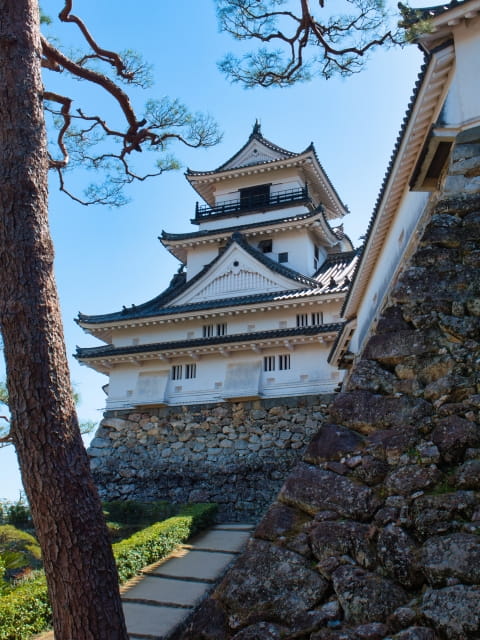
It is extremely rare because nearly all buildings within its main enclosure survive from the Edo period.
Most Japanese castles retain only their keep or have reconstructed structures.
At Kochi Castle, however, the keep, palace, gates, and turrets all remain original.
It is the only castle in Japan where the entire main compound survives almost completely intact.
Construction began under Yamauchi Kazutoyo, the first lord of the Tosa domain.
The current keep was rebuilt in 1753 after a major fire destroyed the previous structure.
The top floor includes an external viewing corridor for appreciating the scenery.
The castle is also famous for photographs capturing both the main gate and the keep together.
Kochi Castle Official Website
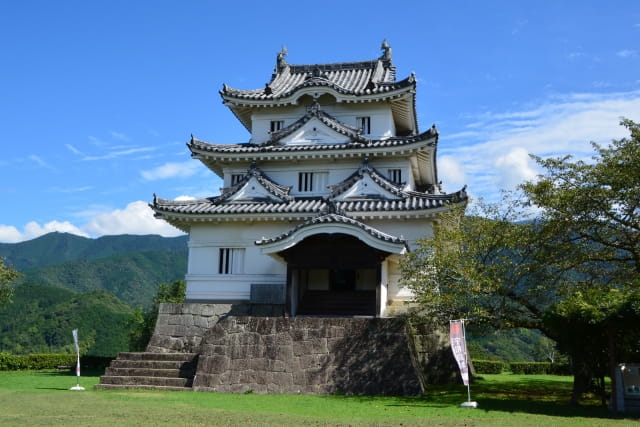
11. Uwajima Castle: Overlooking the Uwa Sea
Uwajima Castle is located in Uwajima City, Ehime Prefecture.
Like Marugame Castle, it is one of the smaller original keeps.
The castle’s overall design was developed by the master castle builder Todo Takatora.
He skilfully used the coastal hills facing the sea as part of the defensive layout.
The present keep was rebuilt around 1666 by Date Hidemune, the eldest son of Date Masamune.
Compared with other keeps, its design is simple and restrained, with fewer decorative gables.
This reflects the peaceful era in which castles became more symbolic than military strongholds.
Inside, tatami rooms create a calm atmosphere that reflects samurai life during the Edo period.
Uwajima Castle Uwajima City Website
12. Iyo Matsuyama Castle: Commanding Views Over the Seto Inland Sea
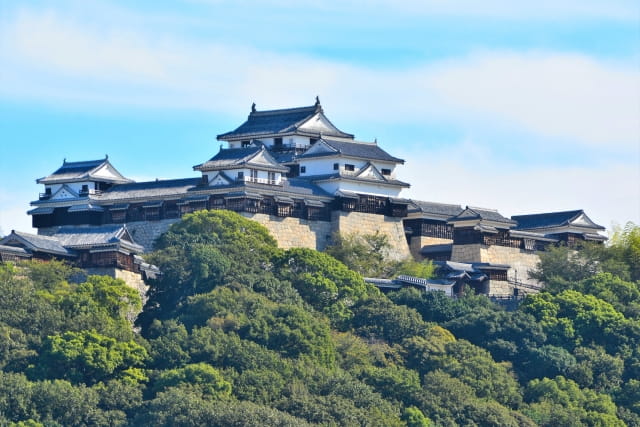
Iyo Matsuyama Castle stands atop Mount Katsuyama in Matsuyama City, Ehime Prefecture, at an elevation of 132 metres.
It was built by Kato Yoshiaki, one of the famous Seven Spears of Shizugatake.
Construction took more than twenty years following the Battle of Sekigahara.
Like Himeji Castle, it features a connected keep complex with strong defensive capabilities.
The current keep was rebuilt in 1854 after a fire destroyed the previous structure in 1784.
It is the newest structure among the twelve original keeps.
It is also regarded as one of Japan’s final authentic castle constructions.
Visitors can easily reach the summit by ropeway or chairlift.
Many gates and turrets also survive within the castle grounds.
From the top floor, visitors can enjoy sweeping views over Matsuyama City, the Seto Inland Sea, and the mountains of Shikoku.
Iyo Matsuyama Castle Official Website
13. Summary
In this article, we introduced Japan’s “12 Original Castle Keeps”, authentic castles that still survive from the feudal era.
These precious cultural treasures, of which only twelve remain in the entire country, each possess their own history and unique character.
For more than four centuries, they have preserved the atmosphere and legacy of the samurai age.
If any of these castles interest you, consider visiting them in person.
The true excitement of historical exploration lies in experiencing the real atmosphere, scale, and historical weight with your own senses.
What are we?
We run Ninja Experience Cafe in Tokyo, Kyoto and Osaka, Japan.
Here you can immerse yourself in Japanese culture through experiencing ninja training.
Both adults and children are welcome to try their hand at defeating the ninja master inside the cafe.
The cafe is an indoor interactive zone, so it can be enjoyed even on rainy days.
If you are thinking "I want to be a real ninja too!” or interested in becoming a real ninja, please visit us.
Reservations can be made here.
Unauthorized copying and replication of the contents of this site, text and images are strictly prohibited.