"Tokyo Metro" Labyrinth: Essential Subway Navigation Tips
 Shinobu
On your very first trip to Tokyo, do you feel overwhelmed by the massive stations bustling with multiple languages and the intricate route maps, wondering whether the subway system is simply too difficult to navigate?
In reality, Tokyo Metro and Toei Subway provide thoughtful systems designed to help you move around smoothly without getting lost, including colour-coded maps, station numbering, special passes for tourists, and handy smartphone apps.
This guide provides a straightforward, step-by-step walkthrough of how to completely conquer Tokyo's subway system, ensuring that even first-time foreign visitors unfamiliar with Japanese railways can ride the trains with confidence starting tomorrow.
- Introduction: Why Tokyo Metro Looks Like a Labyrinth
- Grasping the Big Picture of Tokyo's Underground Network
- Route Maps, Station Numbering, and Colour Coding
- Which Ticket or Pass to Choose: Single Paper Tickets vs Travel Passes
- Making the Most of IC Cards (Suica and PASMO)
- How to Use Ticket Vending Machines: English Displays and Step-by-Step Instructions
- Smartphone Apps and Online Tools for Stress-Free Navigation
- Practical Guide: Moving Through Stations and Transferring Smoothly
- Rush Hour, Safety, and Etiquette
- Common Mistakes and How to Avoid Them
- Summary
1. Introduction: Why Tokyo Metro Looks Like a Labyrinth
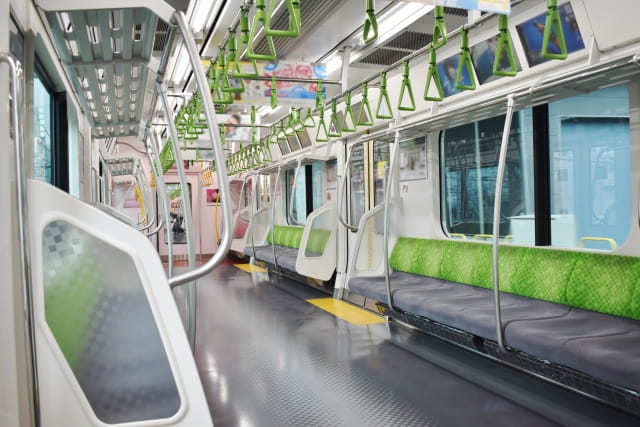
Boasting more than 280 subway stations alone, Tokyo is one of the world's foremost railway metropolises, often appearing to first-time travellers as a true subterranean labyrinth.
However, thanks to distinct colour coding, station numbering, English signage, and an array of helpful maps and smartphone apps, grasping a few fundamental rules turns this complex network into a remarkably efficient and user-friendly way to get around.
This guide breaks down Tokyo subway navigation from a practical, on-the-ground perspective, covering which tickets to purchase, which apps to use, and where travellers tend to lose their way.
2. Grasping the Big Picture of Tokyo's Underground Network
Understanding the Difference Between Tokyo Metro and Toei Subway
Tokyo's underground network is operated by two separate entities.
- Tokyo Metro
- Number of lines: 9
- Scale: Approximately 180 stations across roughly 195 operating kilometres
- Coverage: Centred on the city centre, covering major commercial hubs and prime sightseeing spots
- Toei Subway
- Number of lines: 4 (Asakusa Line, Mita Line, Shinjuku Line, and Oedo Line)
- Characteristics: The Oedo Line forms a loop around central Tokyo, while the Asakusa Line offers direct through services to private railway lines serving Narita and Haneda airports.
Because these two operators maintain separate corporate structures and fare systems, switching between Tokyo Metro and Toei Subway on traditional paper tickets requires separate fares or combined transfer tickets, which is a frequent stumbling block for visitors.
Combining Subways with JR Lines and Private Railways
Beyond the subways, Tokyo features a dense network of JR lines, such as the Yamanote Line, alongside numerous private railways including Tokyu, Odakyu, Keio, and Tobu, with extensive through-service arrangements.
For instance, the Tokyo Metro Chiyoda Line connects directly to Odakyu lines and the JR Joban Line, the Hanzomon Line links to the Tokyu Den-en-toshi Line, and the Hibiya Line connects with Tobu lines.
Consequently, passengers riding what seems to be a subway train may suddenly find themselves out on suburban private railway tracks without having changed trains. When planning your travels, keeping a simple framework in mind works best: use subways for inner-city travel, the circular JR Yamanote Line for broader orbital hops, and private railways for suburban destinations.
3. Route Maps, Station Numbering, and Colour Coding
How to Read the Colourful Network Map
Both Tokyo Metro and Toei Subway offer official colour-coded route maps, which are available as free paper leaflets at stations or can be downloaded as PDF files via the links below:
Toei Subway Route Map
Tokyo Metro Route Map
While the dense maze of lines can feel overwhelming initially, focusing solely on the specific line you need and noting only the critical transfer hubs will instantly reduce visual strain.
Understanding the Station Numbering Rules
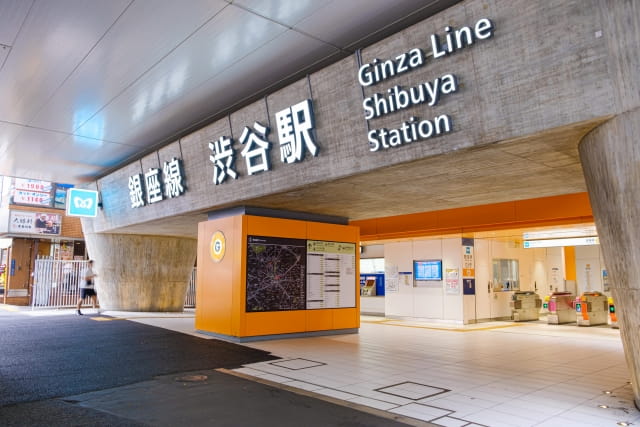
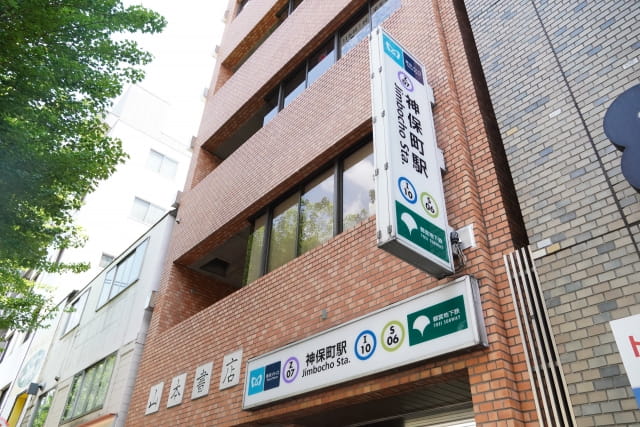
Every Tokyo Metro line is assigned a single alphabet letter (such as G for the Ginza Line or M for the Marunouchi Line) and a distinctive line colour, paired with station numbering structured as line code plus station number.
For example, G09 represents the ninth station on the Ginza Line (G). Because these codes appear consistently on in-carriage screens and platform boards, finding your destination is simple even if you cannot read Japanese kanji characters.
Since maps follow the colour, letter, and number system, travelling from Shibuya (G01) to Asakusa (G19) simply requires boarding a train on the orange G line headed in the direction of ascending numbers.
4. Which Ticket or Pass to Choose: Single Paper Tickets vs Travel Passes
Standard Fares and Single-Journey Tickets
Fares on Tokyo Metro and Toei Subway are calculated based on travel distance.
A single journey on Tokyo Metro costs between 180 and 330 yen, whereas Toei Subway ranges between 180 and 430 yen.
Transferring between the two operators incurs separate base fares for each system.
Single paper tickets can be purchased at station ticket machines by selecting the destination station name or checking the fare chart above the machine.
However, if you plan to take multiple journeys while sightseeing, using an IC card or an unlimited pass is far more convenient.
Tokyo Metro 24-hour Ticket and Common One-day Ticket
The Tokyo Metro 24-hour Ticket is valid exclusively across all nine Tokyo Metro lines for 24 hours from first entry, costing 700 yen for adults and 350 yen for children.
If you travel within the basic minimum fare bracket of 180 yen (1 to 6 km), taking four or more trips in a 24-hour window makes this ticket cost-effective.
The Common One-day Ticket for Tokyo Metro and Toei Subway grants unlimited access to both subway networks for a single day, priced at 1,100 yen for adults and 550 yen for children.
This pass is particularly handy for busy itineraries that combine destinations across both networks in a single day, such as riding the Toei Asakusa Line to Oshiage for Tokyo Skytree, exploring Roppongi and Tsukiji on the Toei Oedo Line, and visiting central attractions via Tokyo Metro lines.
Tokyo Metro 1-Day Open Tickets (Official Website)
Tokyo Subway Ticket for Visitors
Overseas visitors (and domestic travellers living outside the Tokyo metropolitan area) can also buy the Tokyo Subway Ticket, which covers all Tokyo Metro and Toei Subway lines for 24, 48, or 72 hours from first use.
Prices are 1,000 yen (24 hours), 1,500 yen (48 hours), and 2,000 yen (72 hours) for adults, with half price for children. For multi-day sightseeing, this is usually the best value.
Tokyo Subway Ticket (Official Website)
5. Making the Most of IC Cards (Suica and PASMO)
What Are Suica and PASMO?
Suica and PASMO are rechargeable contactless smart cards widely accepted across Tokyo Metro, Toei Subway, JR lines, private rail networks, and city buses.
In terms of functionality, there is virtually no difference between them aside from issuing company and visual card design, so you can freely choose either.
You can purchase one at station ticket machines or service windows by paying an initial balance that includes a 500-yen refundable deposit, and top it up as you travel.
Top-ups can be completed at ticket machines or fare adjustment machines located both inside and outside station ticket gates.
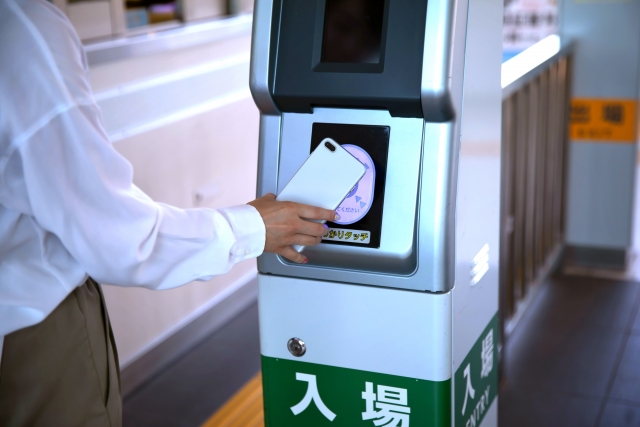
At the gates, simply tap your card onto the reader to enter and exit.
Fares are automatically deducted from your balance, eliminating the need to look up prices or purchase paper tickets each time.
Using Mobile IC Cards
On iPhone, you can add Suica or PASMO directly to Apple Wallet and tap your phone at the ticket gates. Many Android phones sold outside Japan do not support Japanese mobile IC cards, so Android users should check compatibility before travelling or simply use a physical card.
Because balances can be topped up directly within the app or via Apple Pay, this method is ideal for travellers who prefer to avoid handling cash.
Practical Uses Beyond Subway Travel
Suica and PASMO are also accepted at station vending machines, convenience stores, and station luggage lockers.
If you intend to visit convenience stores and cafes frequently while sightseeing, your IC card serves as a convenient digital wallet for transport and everyday micro-payments alike.
6. How to Use Ticket Vending Machines: English Displays and Step-by-Step Instructions
Most station ticket machines support multiple languages, allowing simple operation once switched to English.
Here is the general purchasing process:
- Select your preferred language on screen, such as English.
- Select the ticket type, such as Ticket or One-way.
- Search for your destination station name or choose the required fare amount.
- Insert cash or use an accepted cashless payment method.
- Collect your ticket and any change.
When purchasing a physical IC card, select Purchase New Card on the screen, pick the card type and desired initial balance, insert payment, and the card will be issued immediately.
7. Smartphone Apps and Online Tools for Stress-Free Navigation
Recommended Navigation Apps and Route Planners
Transit and subway-specific apps are invaluable companions when exploring Tokyo.
- Tokyo Metro Subway (by Mapway)
- Provides route maps for both Tokyo Metro and Toei Subway, transit directions, and estimated travel times in English.
- Tokyo Metro Subway App Website
- NAVITIME Japan Travel
- Designed for international visitors, this comprehensive app suggests routes covering trains, walking, buses, and sightseeing points of interest.
- NAVITIME Japan Travel Official Website
These tools offer vital details that paper maps cannot show, including transfer times and optimal carriage boarding positions.
Offline-Accessible Maps
Saving a PDF route map onto your phone or picking up a printed paper map at station counters helps you track your position against your destination even without an active internet connection.
Given that cellular data can occasionally drop underground, having basic maps immediately accessible provides welcome peace of mind.
8. Practical Guide: Moving Through Stations and Transferring Smoothly
What to Check Before Entering a Station
Major terminal stations such as Shinjuku, Shibuya, and Tokyo Station feature dozens of separate street entrances.
Checking surface street signage and specific exit numbers beforehand on maps or apps to determine which entrance lies closest to your intended line and ticket gate will save you considerable walking inside the station.
Routine at Ticket Gates, Platforms, and Onboard
When using paper tickets, insert the ticket into the ticket slot at the gate and be sure to retrieve it as it pops out at the other end.
For physical or mobile IC cards, simply tap the IC card reader when entering and leaving.
On the platform, queue behind the floor markings and always allow disembarking passengers to step off before boarding.
While inside carriages, follow standard Japanese commuting etiquette: switch phones to silent mode, avoid voice calls, refrain from using phones near priority seating, and keep headphone volume low to prevent sound leakage.
Reading Signage to Avoid Getting Lost During Transfers
Station concourses feature overhead hanging signs showing the line colour, route symbol, line name, and directional arrows.
For instance, a sign reading H Hibiya Line with an arrow clearly points the way, so keeping the line colour and symbol in mind will guide you directly to the correct platform.
Transferring between lines in massive stations can take anywhere from 5 to 10 minutes of walking, so allow ample buffer time when planning your itinerary.
9. Rush Hour, Safety, and Etiquette
Peak Commuter Hours and How to Avoid Them
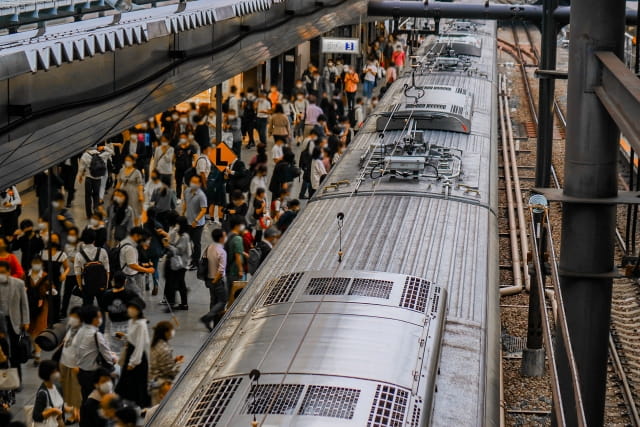
Tokyo subways experience peak crowding on weekday mornings between 7:30 and 9:30, and weekday evenings between 17:30 and 19:30.
During peak periods, you may see station platform staff assisting passenger boarding to keep doors clear, making it difficult to travel comfortably with bulky luggage.
To travel in comfort, consider setting out after 10:00 or early in the morning between 5:00 and 7:00 to bypass the rush.
Safety Precautions and Handling Unexpected Issues
While Tokyo's subway network ranks among the safest urban transport systems globally, petty theft like pickpocketing remains a small risk in dense crowds.
Keeping valuables secured in front-facing pockets or holding rucksacks against your chest will help keep belongings safe.
Should you lose your way or face difficulties, visit station information counters or staffed gate kiosks. Major stations feature multi-lingual tourist assistance centres equipped to support English speakers.
10. Common Mistakes and How to Avoid Them
Knowing these frequent pitfalls ahead of time helps keep your travel plans smooth and relaxed.
- Mistake 1: Getting trapped at gates due to operator differences.
- Solution: Look out for Tokyo Metro versus Toei Subway logos, or simplify travel across both networks by using an IC card.
- Mistake 2: Missing scheduled bookings due to transfer delays.
- Solution: Assume transfers in large interchange hubs will require at least 10 minutes of walking.
- Mistake 3: Missing the last train.
- Solution: Most subway lines stop running around midnight, so begin heading back toward your hotel by 23:00.
- Mistake 4: Exhaustion from heavy crowds dampening your holiday spirit.
- Solution: Shift your travel times outside peak hours, and feel free to walk or take short taxi rides for single-stop hops.
11. Summary
Tokyo's subway system might seem daunting at first glance, but once you combine colour-coded maps, station numbers, universal IC cards, tourist travel passes, and smart transit apps, it shifts from an intimidating maze into an exceptionally convenient backbone for your holiday.
Picking up an IC card or a tourist subway ticket, plotting your journey on an app, and scheduling your travels around rush hours are the key first steps to a smooth subway journey.
After a few rides, identifying stops by colour, letter code, and station number will become second nature.
Once you master the Tokyo underground, accessing premier sightseeing spots becomes effortless, turning your daily journeys into an enjoyable part of your holiday experience.
Ready to put your new subway skills to the test? Ride the Ginza Line or Toei Asakusa Line to Asakusa and visit Ninja Experience Cafe Asakusa, or head to the Harajuku area and stop by Ninja Experience Cafe Harajuku, where you can try authentic ninja training indoors, whatever the weather.
What are we?
We run Ninja Experience Cafe in Tokyo (Asakusa and Harajuku), Kyoto and Osaka, Japan.
Here you can immerse yourself in Japanese culture through experiencing ninja training.
Both adults and children are welcome to try their hand at defeating the ninja master inside the cafe.
The cafe is an indoor interactive zone, so it can be enjoyed even on rainy days.
If you are thinking "I want to be a real ninja too!" or interested in becoming a real ninja, please visit us.
Reservations can be made here.
Unauthorized copying and replication of the contents of this site, text and images are strictly prohibited.