Expo 2025 Osaka: Looking Back on the Futuristic Event
 Shinobu
From 13 April to 13 October 2025, Expo 2025 Osaka, Kansai took place on the artificial island of Yumeshima in Osaka!
It was truly a celebration of tomorrow, bringing together wisdom and state-of-the-art technologies from right around the globe.
The overarching theme was "Designing Future Society for Our Lives".
Here, an environment unfolded like a living "people's living lab for a future society", where visitors could genuinely experience everyday life of the future.
For those keen to understand what the event was like, this article offers an accessible overview, spanning basic information, key highlights, and practical visitor arrangements of the period.
- What Sort of Event Was Expo 2025 Osaka?
- Expo Characters: The Official Logo and Myaku-Myaku
- Ticketing and Visiting Details of the Time
- The Grand Roof Ring: A Symbol of the Future and a Scenic Vantage Point
- Pavilions of the World: A Thrilling Showcase
- Ways to Enjoy the Expo Beyond Pavilions
- Access Routes
- Summary

1. What Sort of Event Was Expo 2025 Osaka?
Expo 2025 Osaka, Kansai was an international exposition held across a span of 184 days.
This marked the second time Osaka hosted a World Expo, the first being in 1970.
Vast crowds of visitors converged on the site from across Japan and overseas.
Under the theme "Designing Future Society for Our Lives", the event embodied the aspiration to let each individual life shine, respect diversity, and co-create a future society together.
Furthermore, the Expo supported the realisation of the SDGs and Japan's vision of Society 5.0 (an ultra-smart society), functioning as a venue where attendees could directly experience a future society driven by AI, robotics, and IoT.
2. Expo Characters: The Official Logo and Myaku-Myaku
The official logo symbolised the "brilliance of life", taking inspiration from biological cells.
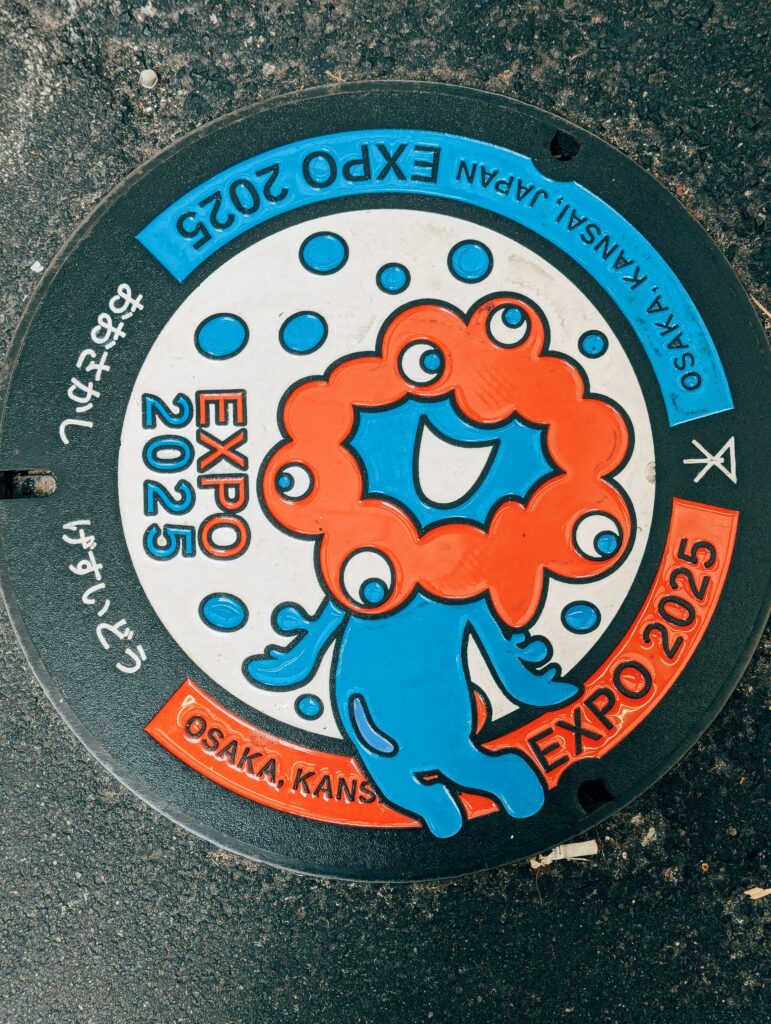
The official mascot, Myaku-Myaku, was a whimsical creature uniting red and blue elements.
Constantly shifting its form, it stood as an enduring symbol carrying hope toward the future.
3. Ticketing and Visiting Details of the Time
Advance purchase served as the standard approach for admission tickets.
High-demand pavilions called for advance reservations, which were administered through avenues such as the official portal.
The venue operated entirely on cashless payment methods, with credit cards and electronic money in standard use.
Because large luggage could not be brought inside, visitors were encouraged to use luggage services at hotels, rail stations, or airport lockers.
Free water refill stations were also installed throughout the grounds, making personal reusable bottles particularly handy.
4. The Grand Roof Ring: A Symbol of the Future and a Scenic Vantage Point
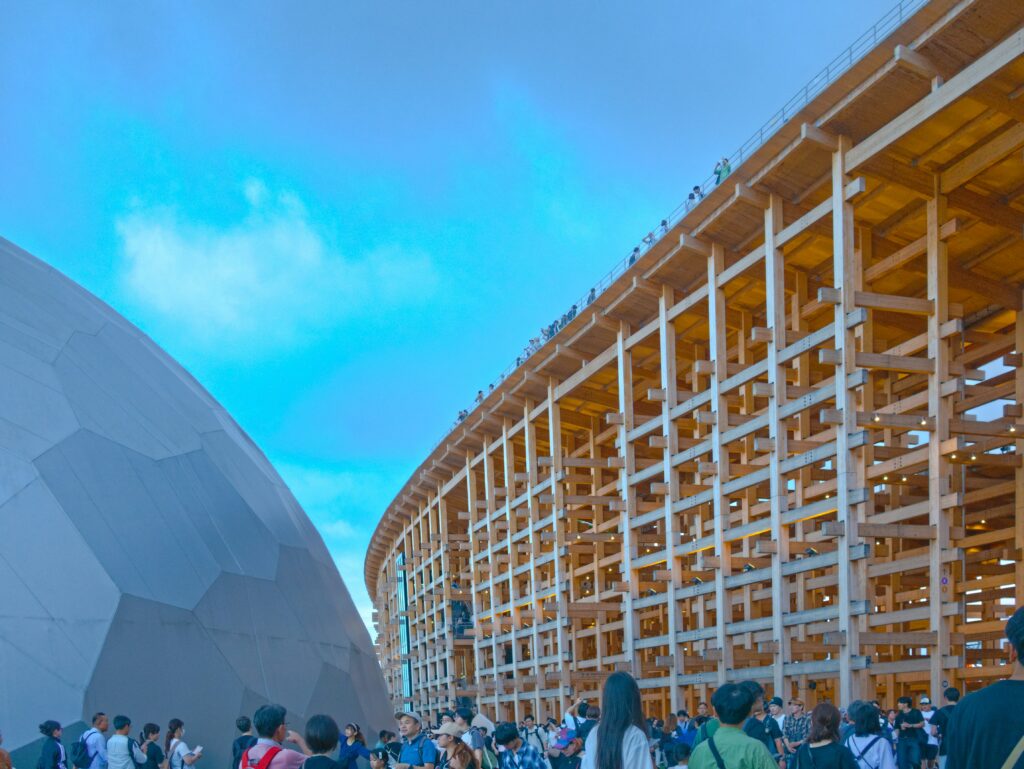
The central landmark of the site, the Grand Roof Ring, was the world's largest wooden architectural structure, masterminded by architect Sou Fujimoto.
Measuring 2 km in circumference and standing 12 metres tall, it encircled the various pavilions across the venue.
From the elevated skywalk atop the ring, guests could take in sweeping views across the entire grounds and Osaka Port!
Following the conclusion of the Expo, plans were put in place to dismantle the structure and repurpose its timber materials.
As an extraordinary encounter exclusive to the event's duration, it was captured in countless photographs.
5. Pavilions of the World: A Thrilling Showcase
A rich assembly of distinctive pavilions gathered from countries across the globe.
Japan Pavilion: Housed inside a wooden ring structure, it let guests experience biological recycling and bio-power generation utilising micro-organisms!
Germany Pavilion: Sustainability served as the core theme, where attendees could explore concepts alongside the mascot "Circulars".
Korea Pavilion: The exterior facade served as a massive screen, delivering moving experiences via visual narratives centred on future technologies!
USA Pavilion: Centred on the theme "Imagine What We Can Create Together", its wooden architecture drew inspiration from Japanese wabi-sabi aesthetics.
Red Cross and Red Crescent Pavilion: A dome theatre screened deeply moving stories dedicated to the enduring power of humanitarian action.
6. Ways to Enjoy the Expo Beyond Pavilions
The venue was filled with attractions allowing visitors to engage directly with futuristic technologies.
Demonstrations such as "flying cars" captured tremendous public fascination.
AI-driven personal agent apps were also introduced to assist visitors along the way.
Across the central water plaza, grand productions combining water effects and music were regularly staged!
It offered a captivating environment destined to spark wonder in children and adults alike.
7. Access Routes
Because Yumeshima was an artificial island, private motor vehicles were strictly restricted from entering.
Utilising public transport networks was therefore essential.
- Train: Taking the Osaka Metro Chuo Line directly to Yumeshima Station required around 20 to 25 minutes from the city centre.
- Shuttle Bus: Dedicated services operated from hubs like Shin-Osaka Station, Osaka Station, Namba Station, and Kansai International Airport.
- Other Options: Access via bicycle, passenger ferries, and licensed taxis was likewise accommodated.
8. Summary
Expo 2025 Osaka, Kansai stood as an extraordinary opportunity to engage directly with future society, innovation, and culture.
Witnessing forward-looking endeavours toward the SDGs and Society 5.0 at close quarters allowed guests to connect with global knowledge and expertise.
Through this distinctive exposition, countless fresh insights and lasting inspirations were broadcast across the globe.
What are we?
We run Ninja Experience Cafe in Tokyo, Kyoto and Osaka, Japan.
Here you can immerse yourself in Japanese culture through experiencing ninja training.
Both adults and children are welcome to try their hand at defeating the ninja master inside the cafe.
The cafe is an indoor interactive zone, so it can be enjoyed even on rainy days.
If you are thinking "I want to be a real ninja too!” or interested in becoming a real ninja, please visit us.
Reservations can be made here.
Unauthorized copying and replication of the contents of this site, text and images are strictly prohibited.