Mythical Reasons Why Shrines Have Torii Gates
 Shinobu
One of the most recognizable symbols of Japan is the distinctive red gate known as a torii.
From the endless tunnels of gates at Fushimi Inari Taisha to the floating gate at Itsukushima Shrine, these structures leave a strong impression on visitors.
Many travelers see them as a visual expression of “Japan itself.”
Yet a torii is not just decoration or a photo backdrop.
It represents a boundary.
A visible marker between the human world and a sacred realm inhabited by countless deities.
Why have people in Japan built these gates and passed through them for over a thousand years?
1. The Meaning of Torii: A Boundary Between Worlds
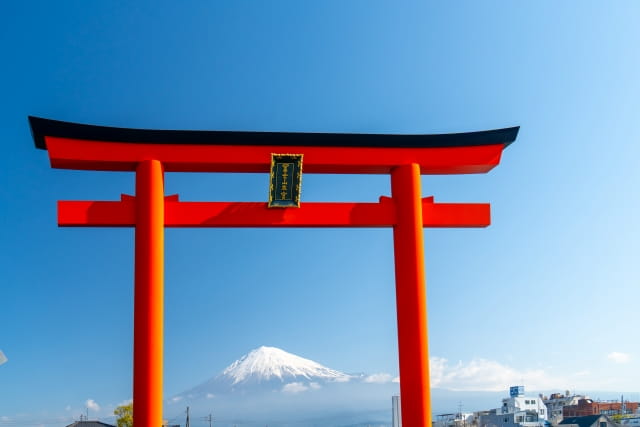
The essential role of a torii can be summed up in one word: boundary.
In Shinto belief, spirits are thought to reside in all elements of nature.
Mountains, rivers, trees, rocks, even wind and thunder.
A shrine is the place where these deities dwell.
A torii marks the entrance to that sacred space and carries several meanings.
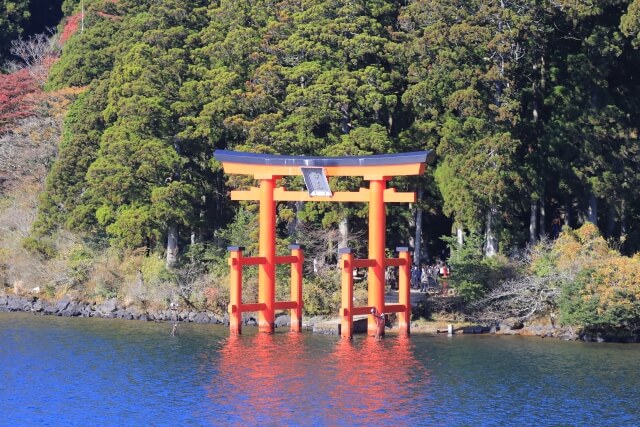
- Boundary between sacred and everyday worlds
- Inside the gate is the sacred realm. Outside is ordinary life.
- Passing through the torii symbolizes leaving behind impurity and entering a purified space.
- Spiritual barrier
- It is believed to prevent negative forces from entering the sacred area.
- Symbol of a sacred place
- Seeing a torii from a distance signals that you are approaching a place of reverence.
In a way, a torii quietly says: prepare yourself before entering.
2. Origins of Torii: Myth and Mystery
The exact origin of torii gates remains unclear.
Several theories exist.
One comes from Japanese mythology.
- When the sun goddess Amaterasu hid inside a cave, the world fell into darkness.
- Other deities tried to lure her out by placing roosters on a wooden perch to crow.
- That perch is said to be the origin of the torii.
Another theory suggests influence from abroad.
Similar gate structures exist across Asia, such as Indian torana gates and Chinese paifang.
Even the word torii has multiple interpretations.
It may mean a place where birds sit or come from a phrase meaning to pass through.
The mystery remains part of its charm.
3. Structure: Simple Form, Deep Design
At first glance, a torii looks very simple.
Yet each part has a specific name and role.
- Kasagi: the top horizontal beam
- Shimagi: a secondary beam beneath it
- Nuki: the lower crossbeam connecting the pillars
- Hashira: the two vertical pillars
- Gakuzuka: the central support for a plaque with the shrine’s name
Most torii consist of just two pillars and two crossbeams.
The balance and proportion reflect a strong sense of Japanese minimalism.
4. Styles: Two Main Types
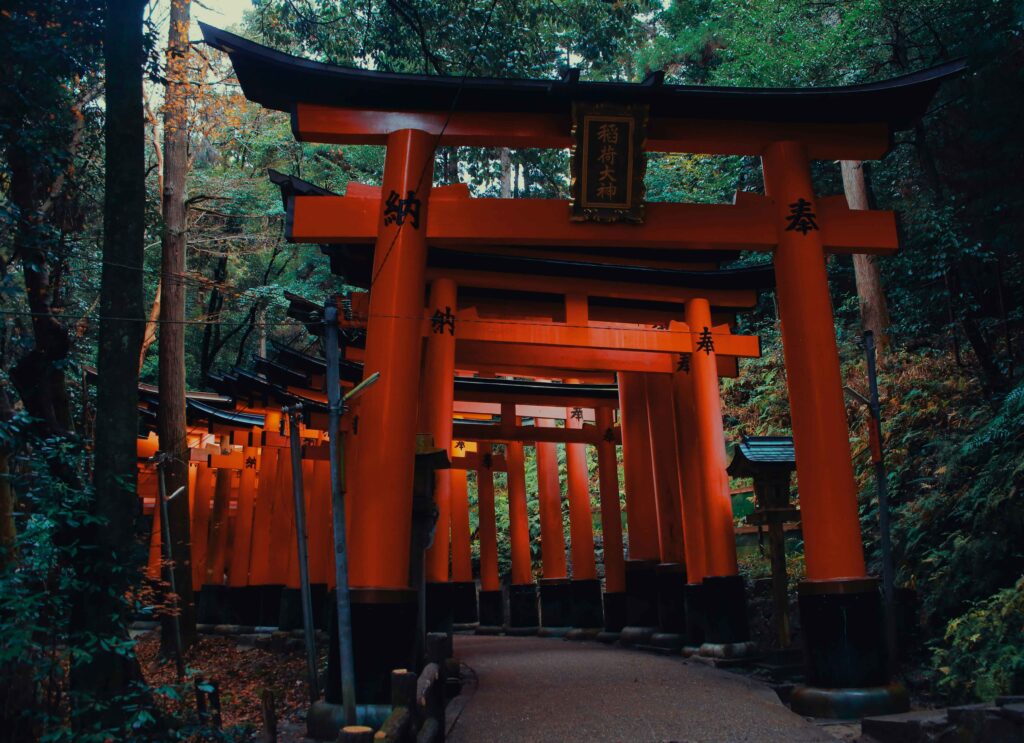
There are many variations of torii, but most fall into two categories.
- Shinmei style
Straight lines and a simple form.
The top beam is flat with no curve.
- Myojin style
More decorative and dynamic.
The top beam curves upward at both ends.
This is the style most people imagine.
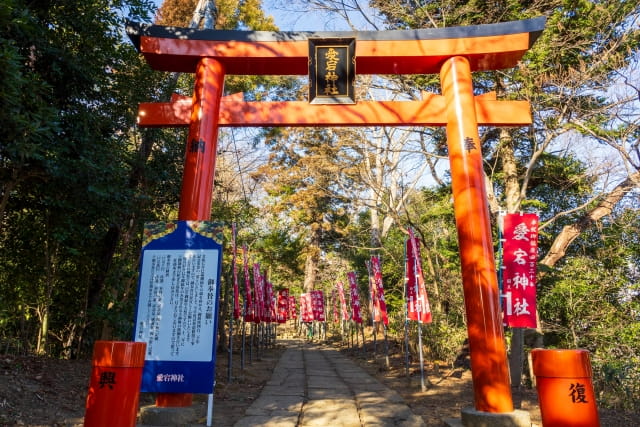
5. Why Are Torii Red?
Not all torii are red.
Many are made of wood or stone.
Still, red remains the most iconic color.
There are two main reasons:
- Spiritual meaning: The vermilion color symbolizes life, the sun, and protection. It has long been believed to ward off evil spirits.
- Practical function: The pigment traditionally used helps protect wood from decay and insects.
The color combines belief with practical knowledge.
6. Not Only Red: A Hidden World of Colors
Travel across Japan and you will discover torii in many colors.
Each reflects the character of the shrine.
Each color reflects the history of the shrine or the nature of its deity.
Considering the color of a torii can offer insight into the wishes people have entrusted to that place.
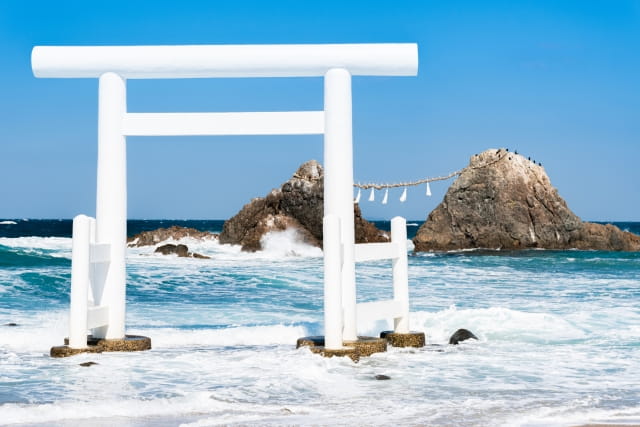
- White torii
Symbolizes purity and cleanliness.
Often associated with important shrines such as Izumo Taisha.
- Black torii
Made from unprocessed wood with bark intact
This is one of the oldest forms and conveys a strong connection to nature.
- Gold torii
Associated with prosperity and financial fortune.
- Stone torii
Common since the Kamakura period. Their durability symbolizes enduring faith.
7. Etiquette: How to Pass Through a Torii
Understanding basic etiquette enhances the experience.
- Bow before entering
Pause at the gate and give a slight bow as a greeting.
- Walk along the side
The center path is considered the route of the deities.
Visitors walk to either side.
- Bow when leaving
After exiting, turn back toward the shrine and bow once more.
More important than form is a respectful attitude.

8. Famous Torii to See in Japan
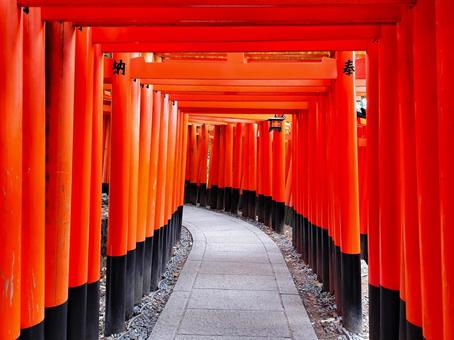
Fushimi Inari Shrine (Kyoto)
Thousands of gates form a striking red tunnel.
Fushimi Inari Taisha Official Website
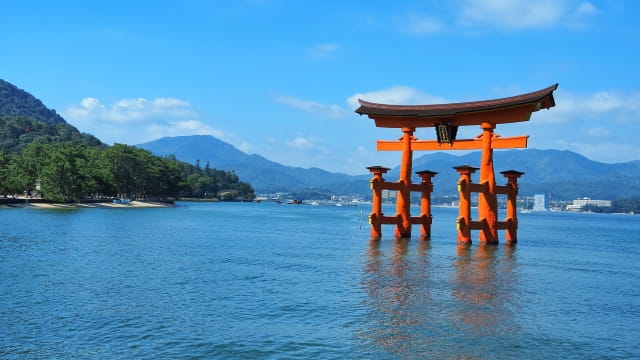
Itsukushima Shrine (Hiroshima)
A giant torii appears to float on the sea.
Itsukushima Shrine Official Website
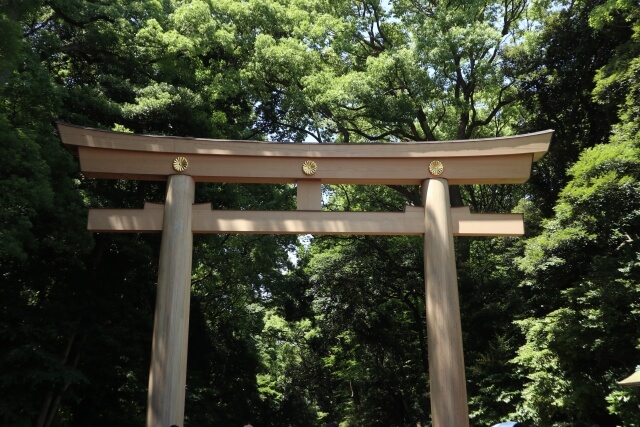
Meiji Jingu Shrine (Tokyo)
Massive wooden torii stand within a forest in Tokyo.
Meiji Jingu Shrine Official Website
9. Summary
A torii is not just a gate.
It is a reflection of how people in Japan understand the world.
A boundary between the visible and the invisible.
Next time you see a torii, pause for a moment.
Bow gently.
Then step through.
You may feel that you have entered something deeper than a place.
What are we?
We run Ninja Experience Cafe in Tokyo, Kyoto and Osaka, Japan.
Here you can immerse yourself in Japanese culture through experiencing ninja training.
Both adults and children are welcome to try their hand at defeating the ninja master inside the cafe.
The cafe is an indoor interactive zone, so it can be enjoyed even on rainy days.
If you are thinking "I want to be a real ninja too!” or interested in becoming a real ninja, please visit us.
Reservations can be made here.
Unauthorized copying and replication of the contents of this site, text and images are strictly prohibited.